What is the rarest face shape? Every published figure comes from the tool that published it
On the 32 faces measured for this page, diamond came out rarest and oval most common. That is the answer, and the rest of this page is the part other sites leave out: the sample size, the method, and why nobody can honestly give you a population figure.
Last reviewed 11 August 20266 min readSravya
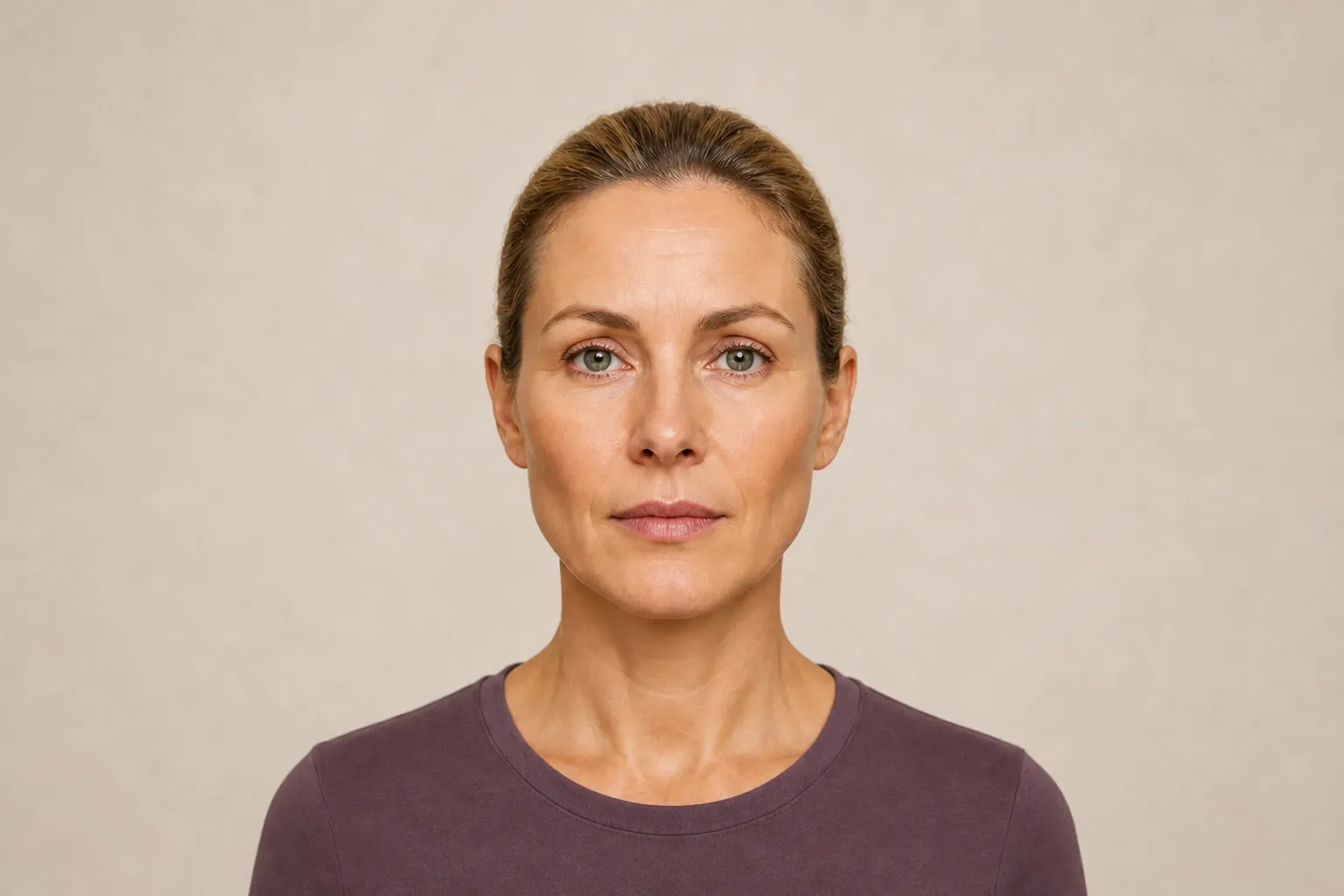
- 2 of 32
- Diamond, least common in this sample
- 44%
- Faces sitting near a boundary
- 7 of 7
- Shapes that occurred at all
One small sample, measured and published rather than asserted.
The more useful figure, and the one nobody else reports.
No shape is exotic. The rarest is uncommon, not absent.
The short version
On 32 measured faces, diamond came out least often at 2 and oval most often at 6. That is a real measurement of a small sample and it should not be mistaken for a fact about the population. The figure worth taking away is a different one: 44 percent of those faces sat close enough to a boundary that the tool reported low confidence. Nearly half of ordinary faces are genuinely between two shapes, which means the question "what is the rarest" matters far less than most pages asking it pretend, and the answer for any individual is more often "two of them" than "one".
01Why every percentage you find is circular
The figures in circulation share a structure. A site builds a face shape tool, runs its own visitors through it, counts the labels its own classifier produced, and publishes the result as a fact about human faces. The number describes the tool, not the population.
- The sample is self selected. People who search for a face shape tool are not a random sample of anybody.
- The classifier defines the categories, so it cannot be evidence about them. Move one threshold and the rarest shape changes.
- Almost none publish a sample size, and none publish the thresholds, so the figure cannot be checked or reproduced.
- The categories are a styling convention rather than a biological fact, and different sources draw the boundaries in different places.
02What 32 faces actually measured
Thirty two portraits, none of them from this site and none of them chosen for their shape, measured on 11 August 2026 through the same pipeline the tool uses. The ratios are in the repository behind this site, so the table below can be re-derived rather than taken on trust.
| Shape | Count | Share of the sample |
|---|---|---|
| Oval | 6 | 19% |
| Square | 6 | 19% |
| Triangle | 5 | 16% |
| Heart | 5 | 16% |
| Round | 5 | 16% |
| Oblong | 3 | 9% |
| Diamond | 2 | 6% |
Thirty two faces is a small sample. It is enough to show that all seven shapes occur and that none dominates. It is nowhere near enough to establish a population figure, and any page telling you diamond is rare in the world on the strength of a sample this size is overreaching, including this one.
On this sample diamond came out least often at 2 of 32, and oval most often at 6. Run the same method on a different 32 faces and those two ends would probably move. The middle of the table would probably not.
03The figure that actually helps
Of the 32 faces, 14 were reported at low confidence, which means the nearest two shapes were close enough together that the tool declined to claim the call was clean. That is 44 percent, and it is a far more useful thing to know than which label is rarest.
It says that being between two shapes is the normal case rather than an edge case. It explains why two websites hand you two different answers about the same face without either being broken. And it changes what you should do with a result: for most people the sensible move is to read the advice for both of the top two shapes, because the difference between adjacent shapes is usually one decision rather than a different approach.
04So which shape is rare, honestly
The honest answer is that no shape in this system is rare enough to be interesting. All seven occurred in 32 faces. The least common appeared 2 times and the most common 6, a spread narrow enough that a different 32 faces could reorder the middle of the table entirely.
If you came here hoping to be told your face is unusual, the measurement will not oblige, and a page that does oblige is telling you what you wanted rather than what it found. What the numbers support is duller and more practical: most faces sit somewhere in the middle, most people are near a boundary, and the useful question is which advice to follow rather than which category to belong to.
Common questions
Sources
Every figure quoted above is listed here with what it was used for and when the source was last checked. Anything not attributed to a source is this site’s own reading and is labelled as such where it appears.
Google
MediaPipe Face Landmarker for the webThe 478 point face mesh the 32 portraits were measured through, and the landmark indices the four distances are taken between.
Last checked 11 August 2026
Check it against your own measurements
The result prints how strongly all seven shapes matched, so you can see for yourself whether your face sits clearly in one or between two. That is the figure this page argues matters most.
Measure yours and see the gapRead next
- Measure your ownEvery figure shown, and the runner up named.
- Stuck between two shapes?One measurement separates each pair.
- How accurate are these tools?A measured failure, its cause and its fix.
- How to Measure Your Face ShapeEvery face shape tool claims to measure your face and then shows you a word. This is the measuring itself: where the tape goes, which four numbers matter, and the ratios each shape sits at.