These are editorial ratio centres for a nearest-profile comparison, not medical categories or size charts. The calculator measures how far your two ratios sit from each of the five centres and reports the closest, along with how close the runner-up came.
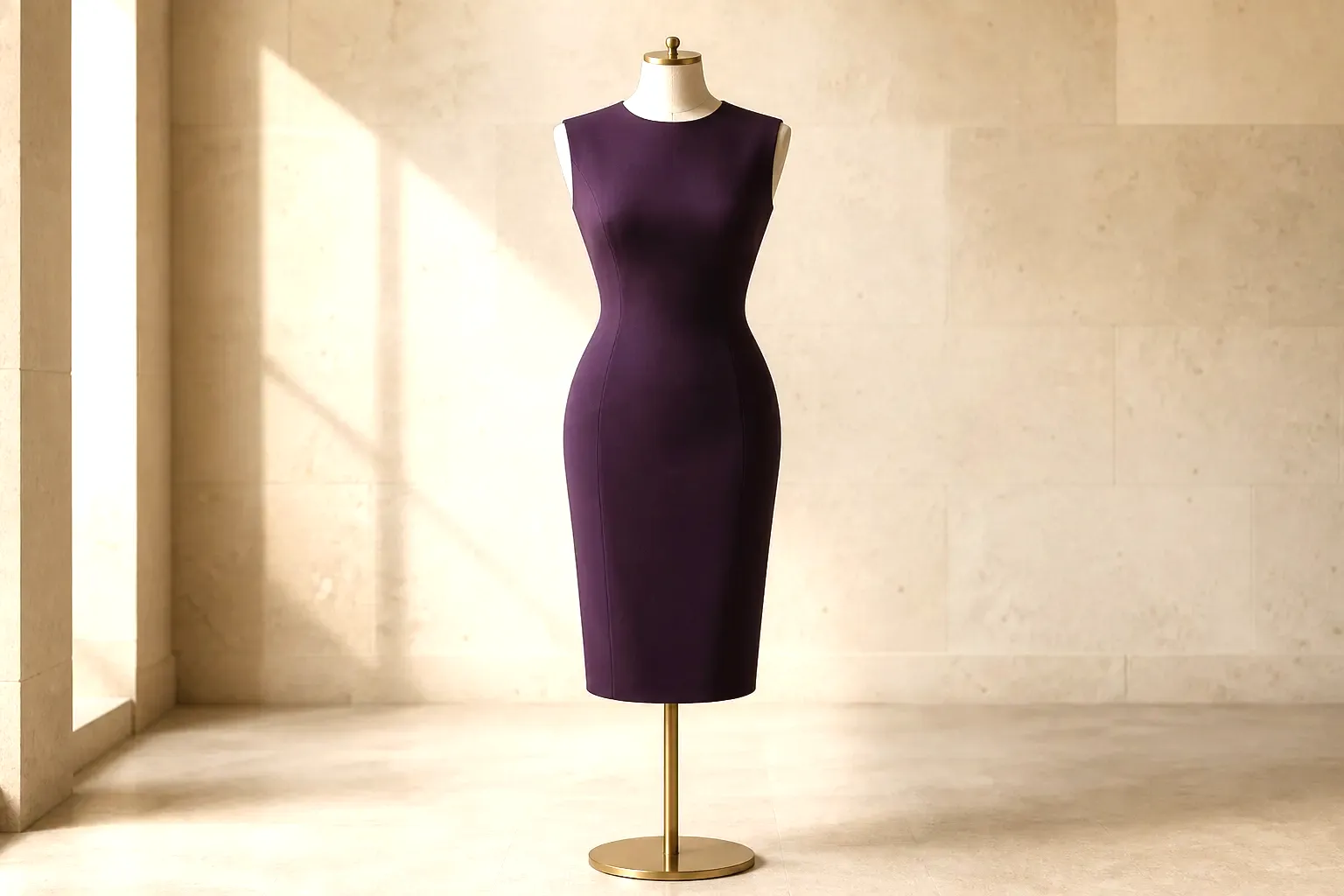
An hourglass has a bust and hip that measure within a few percent of each other, and a waist that is noticeably narrower than both. The waist figure is what separates it from a rectangle, which shares the balanced top and bottom but without the same definition through the middle.
This is a proportion, not a size. An hourglass at a UK size 8 and an hourglass at a UK size 22 share the same ratios and the same styling logic. The measurements that matter are relative to each other, which is why the calculator works in ratios rather than in inches or centimetres.
How to measure yours
Measure the bust at the fullest point, keeping the tape level all the way round and parallel to the floor. Wear a normal bra rather than a padded or minimising one, because both change the number by more than the categories are separated by.
Measure the waist at its narrowest point, which is usually just above the navel and is often higher than people expect. Do not hold your breath in. Measure the hip at the fullest point, which is usually seven to nine inches below the waist and may include the top of the thigh.
Divide bust by hip, then waist by hip. An hourglass sits near 1.00 and 0.72. If the waist figure comes out above about 0.80 with a balanced bust and hip, the shape is reading rectangle instead.
A pear has a hip clearly wider than the bust, near 0.88 bust to hip. If the two are within a few percent, it is not a pear.
The principle behind every suggestion below
The top and bottom are already balanced and the waist is already defined, so clothes that follow the waist work with the proportion, and shapes that hide it flatten a line that is doing the work for you.
Clothes
Nothing here needs correcting, so the useful question is whether a garment follows the waist or ignores it. Straight, boxy cuts tend to read as larger on this shape because they bridge from bust to hip and skip the narrowest point entirely.
Worth reaching for
Wrap tops and wrap dresses, which follow the waist by construction
Shaped jackets that nip in rather than hanging straight
A fitted upper half with straight, bootcut or gently flared bottoms
A belt or a visible waistband when you want to repeat the waist line
Works against it
Boxy, straight shift shapes that skim from bust to hip without acknowledging the waist
Very stiff fabrics that hold a straight line regardless of the body underneath
Dropped waists, which move the narrowest visual point down to the hip
The alteration worth paying for
Take in the waist on a jacket or a dress, and leave the bust and hip alone.
Ready-to-wear is cut for a straighter waist than this shape has, so garments that fit at the bust and hip are usually loose in the middle. Taking in the waist seam is a cheap alteration and it is the one that changes how everything else sits.
Where people go wrong
Buying to fit the largest measurement and living with the rest
Buying a jacket that fits the bust often means a waist several sizes too big. Fitting the widest point and altering the waist gives a better result than sizing down and straining a seam.
Treating hourglass as a compliment rather than a measurement
It is described as the ideal in a lot of older styling writing, which makes people either claim it or reject it emotionally. It is a ratio. It tells you which cuts will need altering and nothing else.
Assuming a belt always helps
A belt repeats the waist line, which is useful when a garment has hidden it. On something already shaped to the waist it can add bulk at the narrowest point rather than defining anything.
Common questions
Only the waist. Both have a bust and hip that measure close to each other. The thresholds used here put an hourglass waist near 0.72 of the hip and a rectangle waist near 0.84. Measure the waist at its narrowest point and divide by the hip, and the answer is immediate.
Yes. The shape is defined by how the three measurements relate to each other, not by what they are. Two people several dress sizes apart can share the same ratios and the same advice.
A straight or boxy cut bridges from the bust to the hip in one line and skips the waist. On a shape where the waist is the narrowest point by a wide margin, that adds visible width exactly where the body is smallest, so the garment reads as larger than it is.
Measurement points, proportional shape comparisons and optional clothing effects.
Last checked 2026-07-31
Not sure this is you?
The calculator compares your two ratios against all five profiles and shows how close the runner-up was, which matters because most people sit between two rather than squarely on one.