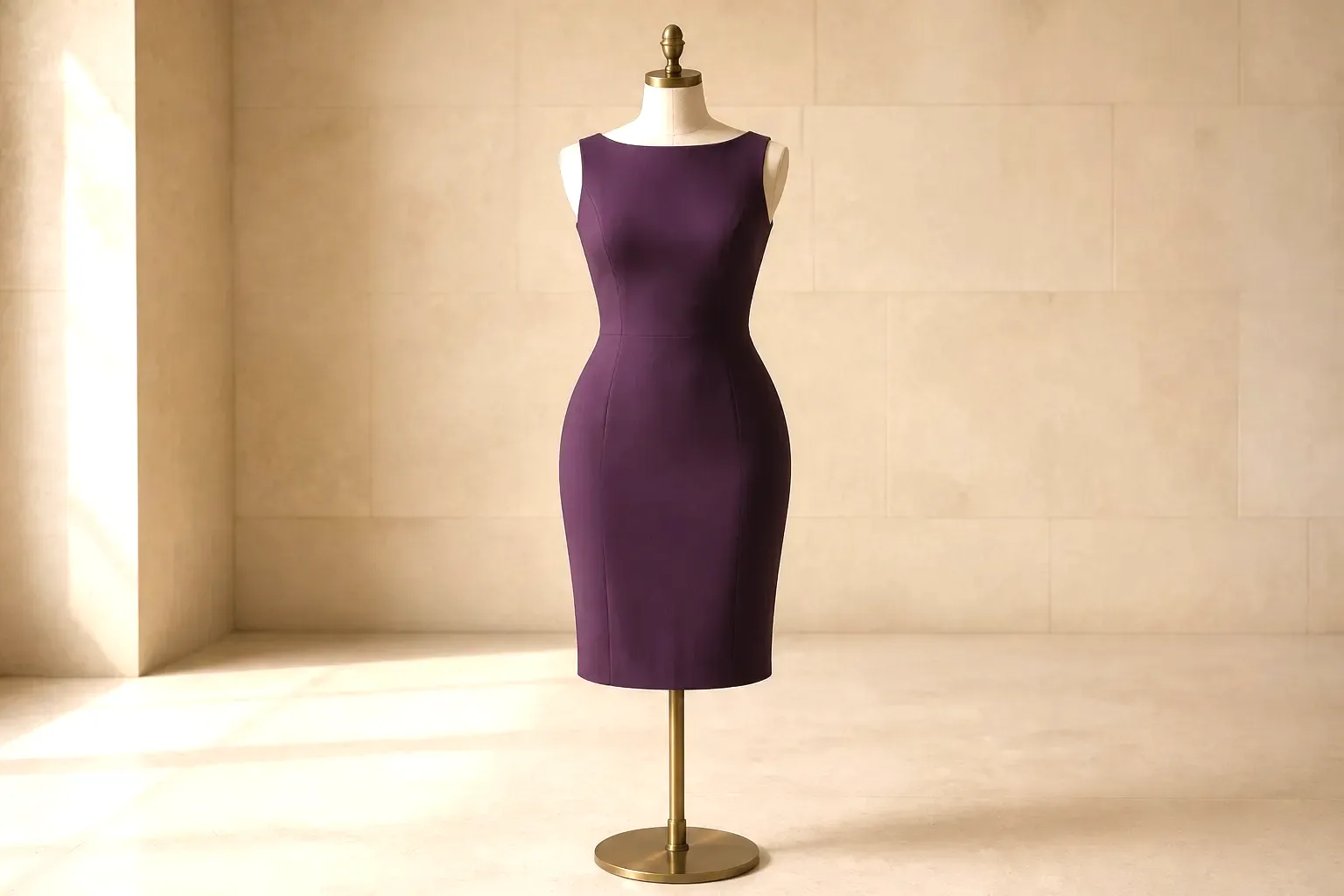
These are editorial ratio centres for a nearest-profile comparison, not medical categories or size charts. The calculator measures how far your two ratios sit from each of the five centres and reports the closest, along with how close the runner-up came.
A pear, sometimes called a triangle or spoon shape, carries more width through the hip than through the bust and shoulders. The waist is usually defined, because it sits between a narrower top and a fuller bottom, so the outline widens steadily from the shoulder down.
It is the most common of the five profiles in the populations these thresholds were drawn from, and it is also the one ready-to-wear serves worst. Most garments sold as a set are cut to a straighter bust-to-hip relationship, which is why buying separates in two different sizes is so often the practical answer here.
How to measure yours
Measure the bust at the fullest point with the tape level, the waist at its narrowest, and the hip at its fullest, which on this shape is often lower than expected and may include the upper thigh.
Divide bust by hip. A pear sits near 0.88, meaning the bust measures around twelve percent less than the hip. Anything within a few percent of 1.00 is reading hourglass or rectangle instead.
Check the waist figure as well, near 0.76 of the hip. If the waist comes out much higher, closer to 0.90, the shape is closer to apple even with a wider hip.
An hourglass has a bust and hip within a few percent of each other. A pear does not. Compare the bust and hip figures directly before looking at anything else.
A rectangle has a balanced bust and hip with a softer waist. A pear has a clearly narrower bust than hip. Again the bust-to-hip figure settles it.
The principle behind every suggestion below
The width sits low and the waist is already defined, so the useful moves add interest and structure through the shoulder and keep the lower half clean and well fitted rather than concealed.
Clothes
The instinct is usually to cover the hip. That tends to backfire, because loose fabric over the widest point adds its own width. Fitting the hip cleanly and building interest higher up moves the eye without hiding anything.
Worth reaching for
Open necklines, detailed shoulders, or simply a brighter top with a quieter bottom
Trousers and skirts fitted to the hip first, then tailored at the waist
A-line skirts and fit-and-flare dresses, which follow the waist and give room through the hip
Structured jackets that finish above or well below the widest part of the hip
Works against it
Loose, draped fabric falling straight from the hip, which adds width to the outline rather than following it
Jackets and tops that end exactly at the fullest point of the hip
Very plain, narrow shoulder lines paired with heavily detailed lower halves
Buy separates in two sizes
Fit the bottom half to the hip and the top half to the bust, and stop trying to make one number work for both.
A twelve percent difference between bust and hip is often a full size or more. Buying a matched set to the larger measurement leaves the top loose. Two sizes costs nothing extra and solves it permanently.
Where people go wrong
Hiding the hip under loose fabric
Fabric that hangs straight from the widest point adds its own volume, so the outline ends up broader than the body. A clean fit through the hip with movement below it works better than concealment.
Cutting the jacket at the widest point
A hem that finishes exactly at the fullest part of the hip draws a horizontal line across it. Moving the hem a few centimetres up or down changes the effect without changing the jacket.
Measuring the hip too high
The fullest point on this shape is often seven to nine inches below the waist and can be lower still. Measuring at the hip bone understates it and can push a genuine pear into a rectangle reading.
Common questions
Yes. Pear, triangle and base-down triangle all describe the same proportion: a hip wider than the bust. Some systems separate a spoon shape, which has a sharper shelf at the hip. The styling logic is the same for all of them.
No. What matters is what sits above them rather than the jeans themselves. A narrow leg paired with a plain, close top repeats the contrast between narrow and wide. The same jeans with a structured or detailed top read completely differently.
A dress is one garment forced to fit two measurements that differ by around twelve percent on this shape. Fitting the hip leaves the bust loose and fitting the bust means it will not do up over the hip. Wrap and fit-and-flare styles handle it best because they let the two halves size independently.
Measurement points, proportional shape comparisons and optional clothing effects.
Last checked 2026-07-31
Not sure this is you?
The calculator compares your two ratios against all five profiles and shows how close the runner-up was, which matters because most people sit between two rather than squarely on one.