What colours suit me? Four questions decide it, and only one of them is about temperature
Most colour quizzes ask whether you are warm or cool and stop. That is one axis out of four, which is why the result so often feels close but wrong.
Last reviewed 3 August 20268 min readSravya
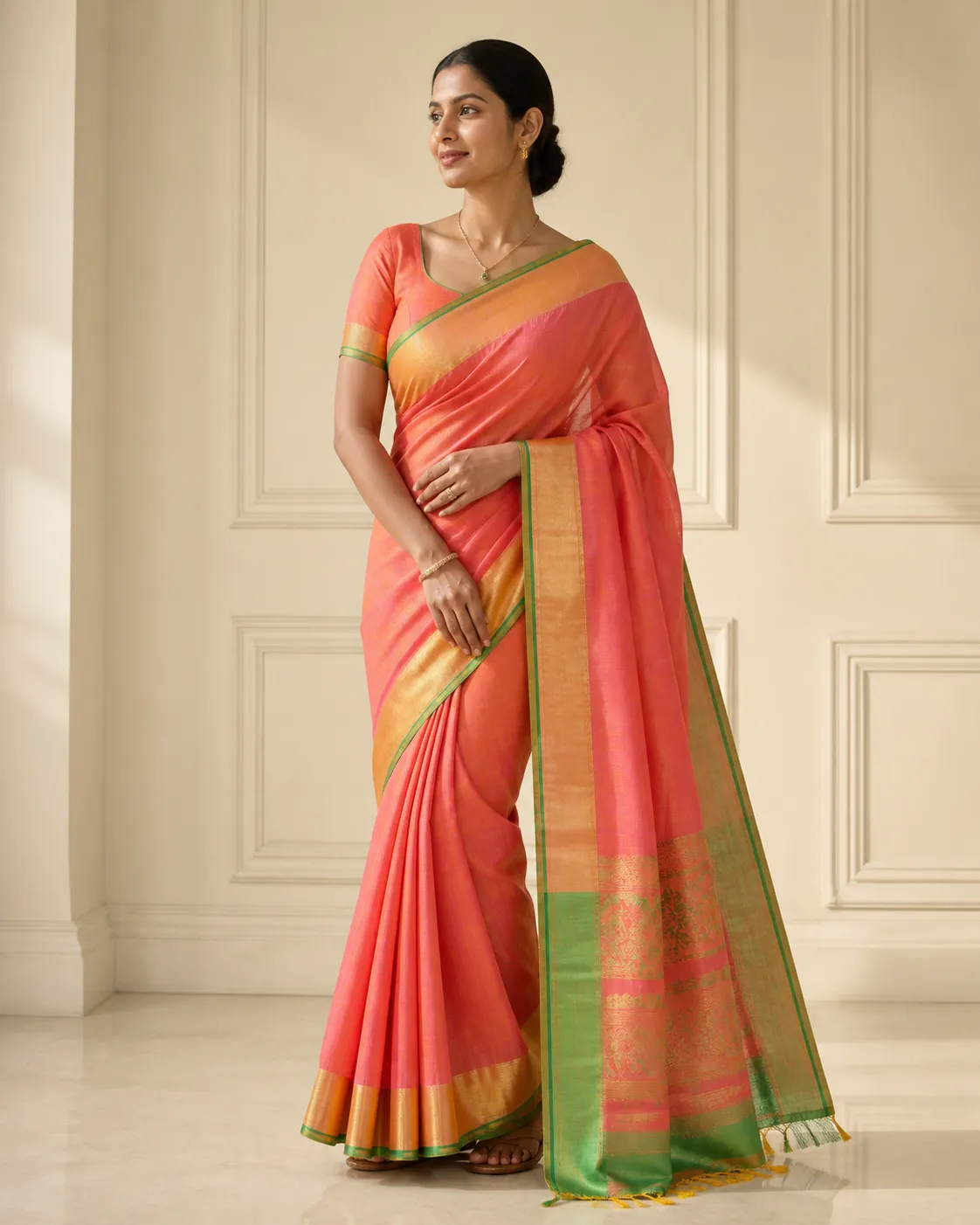
- 4
- Qualities that decide it
- 12
- Seasons they resolve to
- £0
- Cost of testing it properly
Temperature, depth, contrast and clarity.
Four families of three, not the old four.
A window, a white shirt and a gold and silver item.
The short version
Stand by a window in daylight with no makeup and your hair back. Ask four things. Does gold or silver look better against your skin. Do you read light, mid or deep overall when you squint at yourself. Is there a big gap between your hair and your skin, or do they blend. And do clear bright colours or dusty muted ones make you look well rather than tired. Those four answers, in that order, narrow twelve seasons to one. Anything that asks only the first has answered a quarter of the question.
01Do it in daylight or do not bother
Every one of these tests is a comparison of colour, and indoor bulbs shift colour more than most people expect. A warm domestic bulb pushes skin towards gold, which makes almost everyone test warm. Daylight near a window, indoor lights off, is not a nicety here. It is the difference between a reading and a guess.
02The four questions, in order
| Quality | The test | What it decides |
|---|---|---|
| Temperature | Hold a gold item and a silver item under your chin in turn. Look at your skin, not the metal. | Whether you sit in the warm families or the cool ones. |
| Depth | Squint at yourself in the mirror until detail drops out. Do you read light, mid or deep as a whole. | Whether you belong at the light end or the deep end of your family. |
| Contrast | Look at a photo of yourself. How far apart are your hair and your skin. | How strong a colour you can carry without it wearing you. |
| Clarity | Hold a clean bright colour and a dusty muted one of the same shade under your chin. | Whether your colours should be clear or softened. |
Answer them in that order and do not go back. The first answer that felt obvious usually is, and the one you keep changing your mind about is the one that matters, because it is the axis your result turns on.
03Why four seasons was never enough
The original system had four and sorted almost entirely on warm against cool. It fails on a common case. Two people can both be cool, and one of them light and low contrast while the other is deep and high contrast. Put them in the same palette and one of them is wearing colours that flatten them.
Twelve seasons split each of the four along depth and clarity, the two qualities the original ignored. That is why a modern reading scores four things and why a result that only says warm or cool has not finished.
Every season, every colour
12 seasons · 72 shadesLight Spring
Warm Spring
Clear Spring
Light Summer
Cool Summer
Soft Summer
Soft Autumn
Warm Autumn
Deep Autumn
Deep Winter
Cool Winter
Clear Winter
These are the actual palettes the colour tool works from, not a sample. Point at one to hold it. Twelve seasons rather than the old four, because four cannot separate someone light and cool from someone deep and cool.
04Test the palette, not the label
A season name is a filing system, not an outcome. What you actually want is the ten or so colours you will buy again, and you find those by holding candidates near your face in daylight and looking at your skin rather than at the fabric.
- 1Take two garments you already own that people compliment you in. Look for what they have in common on all four qualities, not just hue.
- 2Take one you never reach for despite liking the colour. That is usually a clarity or a depth mismatch rather than a temperature one.
- 3Screenshot your palette and hold the phone up at the rail. Matching a garment to a swatch beats remembering a season name in a shop.
- 4Ignore any rule that says you cannot wear a colour. The palette tells you which version of that colour is yours, not that it is off limits.
Common questions
Sources
Every figure quoted above is listed here with what it was used for and when the source was last checked. Anything not attributed to a source is this site’s own reading and is labelled as such where it appears.
Society for Imaging Science and Technology
Shades of Gray and Colour Constancy (Finlayson and Trezzi, 2004)The white balance correction applied before any skin colour on this site is measured.
Last checked 2 August 2026
Check it against your own measurements
The tool asks the same four questions this page describes, scores them separately, and tells you which of the four your result actually turned on. Change that one answer and watch the season move.
Work through the fourRead next
- Score the four qualitiesEvery figure shown, runner up named.
- Does AI colour analysis work?What a photograph can and cannot establish.
- Settle the temperature questionMeasured from a photo or answered as four checks.
- How to Measure Your Face ShapeEvery face shape tool claims to measure your face and then shows you a word. This is the measuring itself: where the tape goes, which four numbers matter, and the ratios each shape sits at.