whatsuitsme

Cool Winter colour palette

Fully cool at -1.00 with high contrast and clear colours, at moderate depth.

Last reviewed 2 August 2026By Sravya

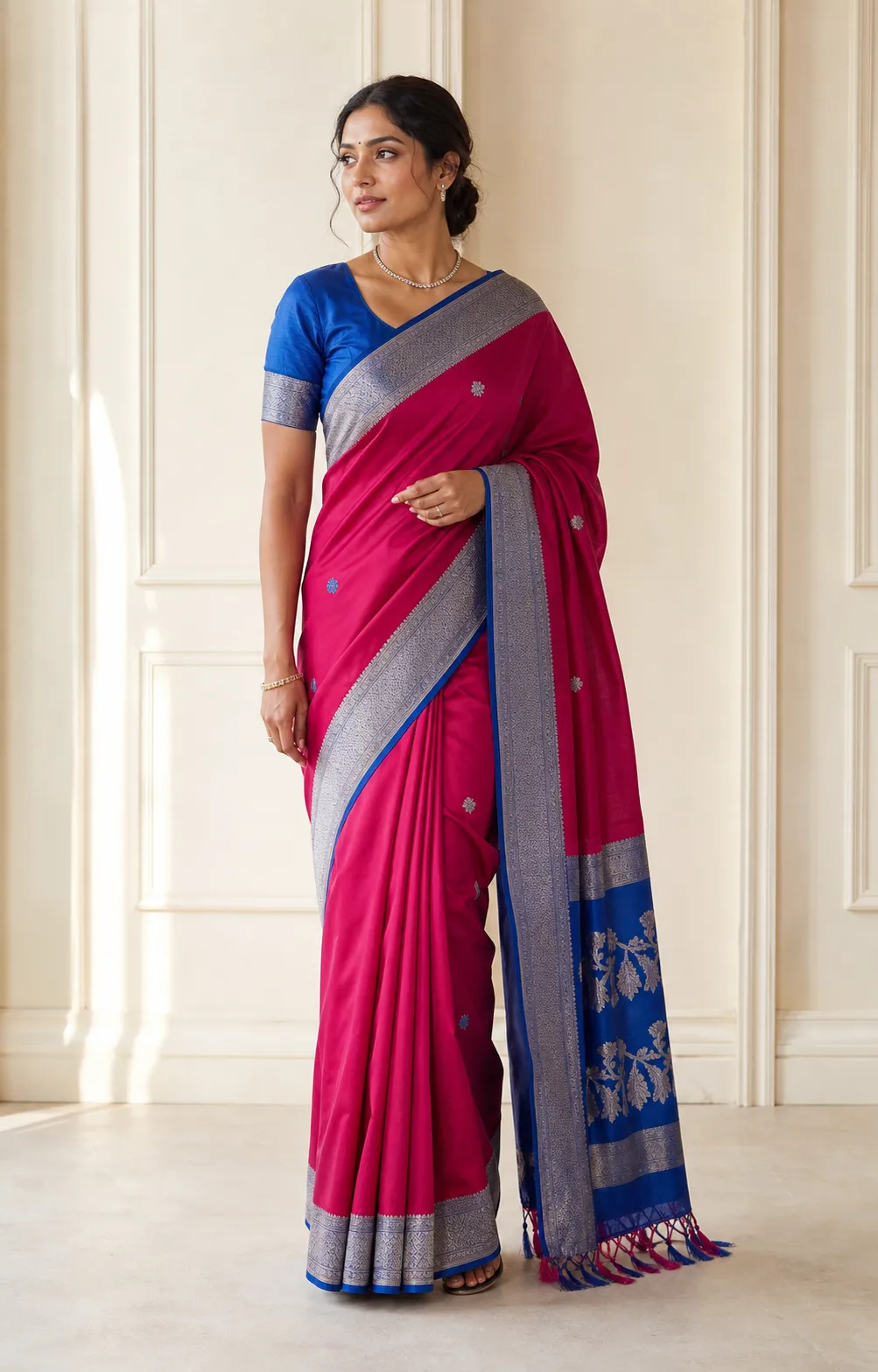
Editorial saree reference for the cool winter palette

The four scores that place it

colour
Temperature
-1.00

cool, blue base

Depth
0.30

slight deep colouring

Contrast
0.70

high, striking

Chroma
0.70

clear, bright

The palette

  • MagentaMagenta, #C2185B
  • SapphireSapphire, #3157A4
  • TurquoiseTurquoise, #008E9B
  • VioletViolet, #6C3FA0
  • ScarletScarlet, #D51F32
  • SnowSnow, #E7EAF2

Each axis runs from about -1 to +1 and is scored separately. These are editorial centres for a repeatable comparison, and the hex values are screen references rather than measured standards. Scoring the four apart is what lets the tool tell you which single call was the shaky one, instead of handing you a season and no reasoning.

Find my colour season

Cool Winter is the purest cool season in the winter family, at the maximum -1.00 on temperature. Colouring is unmistakably blue-based and clearly contrasted: cool-toned skin, hair from ash brown to soft black, and eyes in cool blue, grey or cool brown.

It shares its full coolness with Cool Summer. Chroma separates them: 0.70 here, meaning clear and bright, against -0.60 there, meaning softened. Same temperature, opposite brightness, and it is the pair most often mixed up.

How to check whether this is your season

Confirm full coolness. Silver should beat gold clearly and blue-based reds should beat orange-based ones without argument.

Then test brightness. Hold a bright magenta against your face, then a soft rosewood. Cool Winter takes the bright colour comfortably.

Check contrast is high at 0.70. Hair, skin and eyes should sit clearly apart rather than blending.

What it gets mistaken for

  • Mistaken for

    Cool Summer

    Identical temperature at -1.00. Chroma decides: 0.70 clear here against -0.60 softened there. Bright magenta against soft rosewood.

  • Mistaken for

    Deep Winter

    Deep Winter is deeper at 1.00 against 0.30 here and less strictly cool at -0.35. If the very darkest colours suit best, look there.

Every season, every colour

12 seasons · 72 shades

These are the actual palettes the colour tool works from, not a sample. Point at one to hold it. Twelve seasons rather than the old four, because four cannot separate someone light and cool from someone deep and cool.

The principle behind every suggestion below

Cool and clear at once. Warmth muddies this palette and muting drains it, and both failures are visible immediately at the neckline.

Your colours

This season carries true, saturated cool colour better than any other. Toning it down to be subtle is the usual mistake.

Worth reaching for

  • Magenta, fuchsia and true blue-based red
  • Sapphire, royal blue and turquoise
  • Violet and cool purple
  • Pure white, true black and cool grey as neutrals

Works against it

  • Orange, rust, gold and camel
  • Muted or dusty versions of anything
  • Cream and warm ivory next to the face
  • Olive and warm brown

The white shirt test

Pure optical white should look clean and bright on you, and cream should look slightly dingy.

This one comparison tests temperature and chroma together, which are the two axes that place this season. It is quicker than the vein check and rules out every warm and muted season at once.

Where people go wrong

  • Softening colours to look less bold

    At chroma 0.70 the colouring needs clarity. A muted version of the right colour drains the face more than a bright version of a slightly wrong one.

  • Wearing cream instead of white

    Cream is warm and is the standard compromise offered to people who find white harsh. Here it works against the palette. If white feels harsh, the season is probably not Cool Winter.

  • Being sorted as Cool Summer

    Full coolness is shared. Chroma is what separates them, and it is checked far less often than temperature.

Common questions

Sources and review record

Not sure this is you?

The tool scores temperature, depth, contrast and chroma separately across all twelve seasons, then shows which of the four calls was closest to a boundary. That is the honest answer to why different sites give you different seasons.

Find my colour season

The twelve colour seasons

Or see all the guides.