whatsuitsme

Oblong face shape

Length strongly exceeds width, near 1.58 against cheekbone width, with forehead and jaw widths fairly close to each other.

Last reviewed 10 August 2026By Sravya

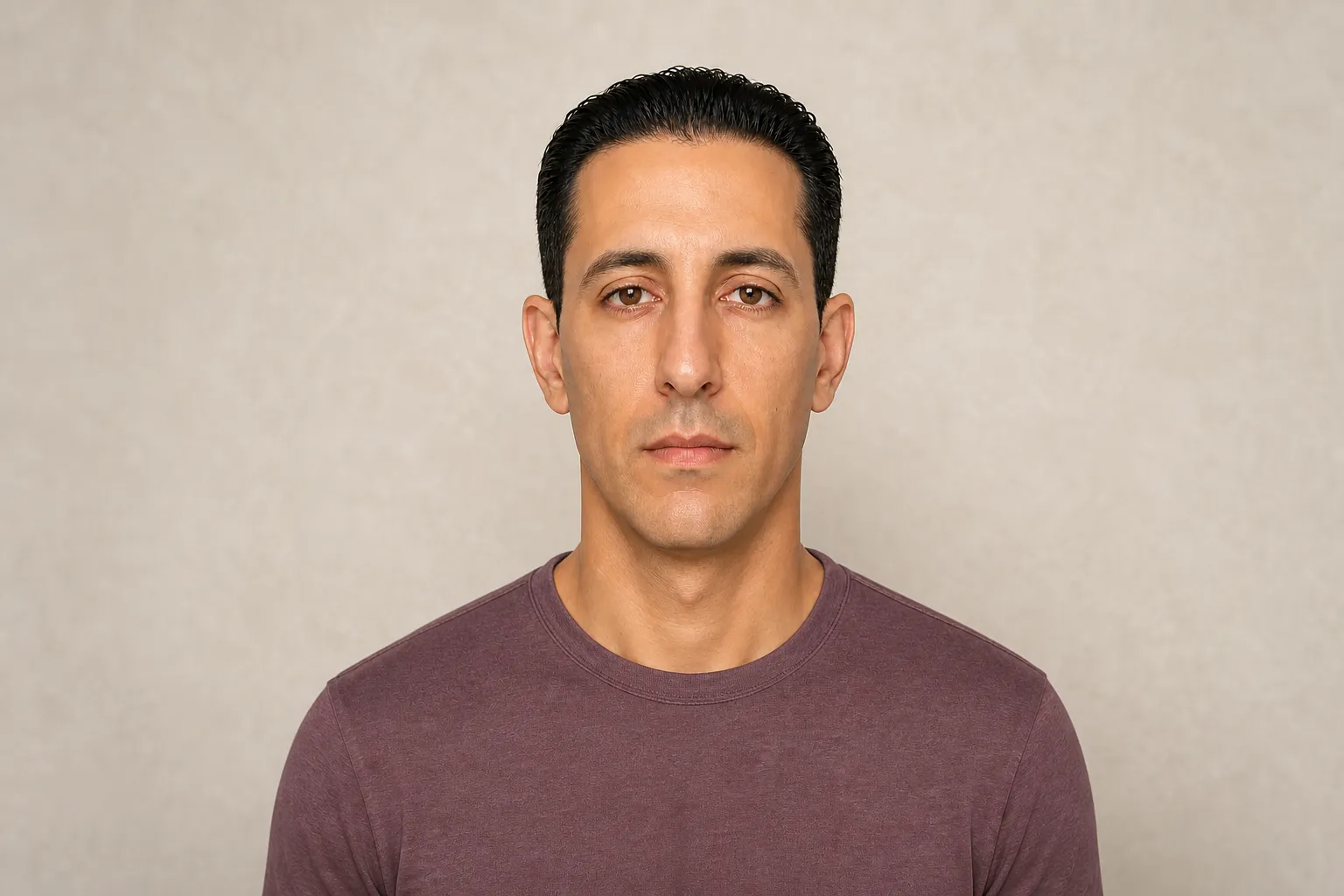
Editorial portrait illustrating oblong face proportions

The ratios that define it

face
Length ÷ cheek
1.58

hairline to chin, over cheekbone width

Forehead ÷ cheek
0.90

widest brow, over cheekbone width

Jaw ÷ cheek
0.84

jaw angles, over cheekbone width

These are editorial thresholds for a repeatable comparison, not anthropometric norms. Landing a few hundredths away from a figure means nothing. Landing a long way from one of them is what decides the shape.

Work out my face shape

An oblong face, sometimes called long or rectangular, is distinctly longer than it is wide, with the forehead, cheekbones and jaw carrying fairly similar widths. There is no dramatic taper. The length is what stands out.

This is the shape most often confused with oval, and the difference is only one of degree. An oval runs about 1.38 times as long as it is wide. An oblong runs nearer 1.58. That gap is not obvious by eye but it changes the advice completely, because the two shapes need opposite things.

How to check whether this is your shape

Measure hairline to chin and the cheekbone width, then divide. Anything approaching 1.5 or above is reading long, and the oblong advice will serve better than the oval advice.

Check the three widths as well. On an oblong they sit reasonably close together, near 0.90 forehead and 0.84 jaw against cheekbone width. If one is dramatically different, the shape is heart, diamond or triangle instead.

Keep the camera level with your eyes. Shooting from below stretches the lower face and can push a genuine oval into oblong territory on the measurement alone.
What it gets mistaken for

  • Mistaken for

    oval

    Same balanced widths, less length. Around 1.38 against cheekbone width for oval, around 1.58 for oblong. The ratio is the only reliable separator.

  • Mistaken for

    square

    A squared jaw can appear on both. Square is short, near 1.10. If a squared jaw sits on a long face, the length is what should drive the styling.

Where the seven shapes actually sit

measured ratios
ovalroundsquareheartdiamondoblongtrianglelength ÷ cheekbone width →jaw ÷ cheekbone →

Round and square sit 0.04 apart on length and 0.09 apart on jaw. That is the entire difference between them, and it is why two sites can give you two different answers from the same face. Ours shows you where you landed rather than only what it decided.

The principle behind every suggestion below

The face is already long, so the useful moves add width near the cheekbones and interrupt the vertical line, and the moves that hurt are the ones that add more height.

Hair

Worth reaching for

  • A blowout with real volume through the sides
  • Waves or curls that sit level with the cheekbones
  • A fringe, which shortens the visible length more effectively than anything else

Works against it

  • Height at the crown paired with flat sides, which stretches the face further
  • Very long, straight, one-length hair with no side movement

See the cuts for this shape, and the wording to give a stylist.

Say this at the salon

My face is quite long, so I want width and movement around the cheekbones, and I do not want extra height at the crown.

Naming the proportion and what you want done about it gives a stylist something to work with. A photograph of someone else does not, because their hair is not yours.

Glasses

A deep lens covers more of the face's vertical span and breaks the length into sections. A shallow frame draws a thin horizontal line across a long face and leaves large uninterrupted areas above and below it, which makes the length more obvious rather than less.

Worth reaching for

  • Tall-lens frames with real vertical depth
  • Rounded frames
  • Deep aviator frames

Works against it

  • Very shallow, narrow rectangles that add almost no vertical depth

See the frame shapes for this face, and the width in millimetres.

Where people go wrong

  • Following oval advice by default

    Because the two shapes share balanced widths, oblong faces are constantly given oval recommendations. Those recommendations tend to be neutral about height and length, which for an oblong face is the one thing that needs managing.

  • Adding crown volume for lift

    Height at the top is a standard piece of general hair advice and it is the wrong move here. It extends the vertical line the shape already has too much of.

  • Ruling out a fringe

    A fringe is one of the few changes that shortens the visible face length immediately. It is often the single most effective option for this shape and it gets skipped because of a general worry about fringes.

Common questions

Sources and review record

Not sure this is you?

The tool measures all seven and shows you how close the runner-up came, which is the useful thing when two shapes score near each other.

Work out my face shape

The seven face shapes

Or see all the guides.